
Stock Trading: A Complete Guide to Investment Strategies, Market Analysis, and Getting Started the Right Way
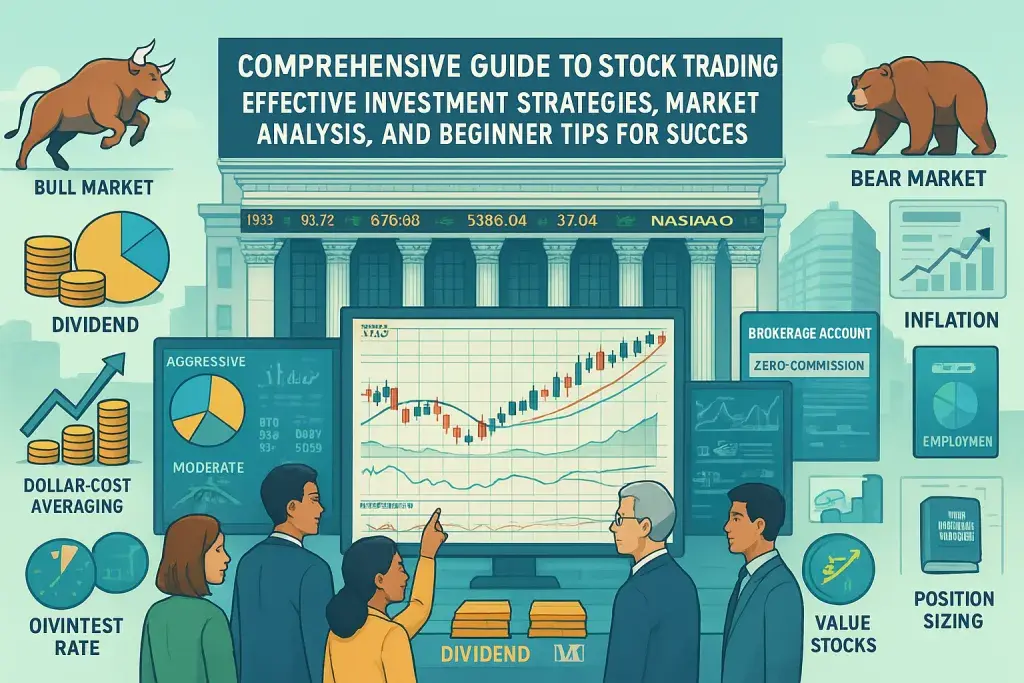
Authored by transwinfreight.com, Mar 01, 2026
Most people who lose money in the stock market do not lose it because the market is unfair. They lose it because they acted without a plan, bought on excitement, sold on fear, and never took the time to understand what they were actually doing. The stock market is not a lottery - it is a structured financial system with rules, patterns, and logic that rewards those who study it and punishes those who guess.
Over the past two decades, access to stock trading has changed completely. Brokerage accounts require no minimum deposit. Fractional shares let you own a piece of any company for a few dollars. Educational content is available around the clock in every format imaginable. For those who prefer visual and step-by-step instruction, platforms like the acc market youtube channel offer supplementary content that helps beginners see real trading scenarios in motion, bridging the gap between reading about markets and actually understanding how they behave.
What has not changed is the underlying requirement for knowledge, discipline, and patience. This guide walks through every essential layer of stock trading - from foundational concepts and financial markets analysis to proven investment strategies and practical beginner trading tips. Whether you are opening your first brokerage account or trying to build a more consistent approach after a rocky start, the information here is designed to give you a real and lasting edge.
Understanding the Stock Market: Foundations Every Trader Must Know
What Is the Stock Market and How Does It Work?
When a company wants to raise capital without taking on debt, it can sell ownership stakes to the public in the form of shares. Once those shares are listed on an exchange, anyone can buy or sell them during trading hours. The stock market is simply the organized system through which that buying and selling happens.
Major exchanges include the New York Stock Exchange and NASDAQ in the United States, the London Stock Exchange in the United Kingdom, and the Tokyo Stock Exchange in Japan, among many others. Each exchange operates under regulatory oversight, enforces listing requirements, and maintains transparent price discovery - meaning the price of any share at any moment reflects what buyers are willing to pay and sellers are willing to accept right now.
Prices change constantly based on supply and demand. When more investors want to buy a stock than sell it, the price rises. When sellers outnumber buyers, it falls. Behind those shifts are earnings reports, economic data, interest rate decisions, geopolitical events, and changes in investor sentiment - all of which create the price movement that traders study and act on every day.
Understanding this mechanism is not optional. It is the foundation on which every investment decision rests. Without it, even the best stock trading tutorials will feel abstract and disconnected from real outcomes.
Key Market Participants and Their Roles
The market does not operate in isolation. Multiple types of participants interact constantly, and their motivations shape price movements in ways that directly affect you as an individual trader.
- Retail investors: individuals trading through personal brokerage accounts, often with smaller capital but significant collective influence
- Institutional investors: hedge funds, mutual funds, pension funds, and insurance companies managing large pools of capital and moving markets through sheer volume
- Market makers: firms that provide continuous buy and sell quotes to ensure liquidity, profiting from the spread between bid and ask prices
- Brokers: intermediaries who execute trades on behalf of clients, either through full-service advisory models or low-cost online platforms
- Regulators: bodies such as the Securities and Exchange Commission in the United States that enforce rules, require disclosures, and protect investors from fraud
When institutional investors make large moves into or out of a sector, prices shift noticeably. When market makers widen their spreads during volatile periods, trading costs rise. Knowing who the other players are and what drives their decisions gives you a clearer picture of why markets behave the way they do.
Important Stock Market Terminology for Beginners
A lack of vocabulary is one of the most underrated obstacles for new investors. When you do not understand the language, you cannot accurately interpret news, earnings reports, or market commentary. The following terms appear constantly in financial markets analysis and are worth committing to memory early.
| Term | Definition | Why It Matters |
|---|---|---|
| Bull Market | A sustained period of rising stock prices, typically defined as a gain of 20% or more from a recent low | Signals favorable conditions for buying and holding growth-oriented stocks |
| Bear Market | A sustained decline of 20% or more from a recent peak | Requires more defensive positioning and careful risk management |
| Dividend | A cash payment made by a company to shareholders from its profits, usually distributed quarterly | Provides income independent of share price movement |
| Portfolio | The complete collection of all investments held by an individual or institution | The portfolio view determines overall risk exposure and return potential |
| Volatility | The degree and frequency of price fluctuation in a stock or market index | Higher volatility increases both potential gain and potential loss |
| Liquidity | How quickly and easily an asset can be bought or sold at a stable price | Low-liquidity stocks carry higher transaction costs and greater price impact risk |
| Market Capitalization | The total market value of a company's outstanding shares (share price multiplied by share count) | Indicates company size, which correlates with stability and growth potential |
Types of Stock Trading: Finding the Right Style for You
Day Trading vs. Swing Trading vs. Long-Term Investing
Stock trading is not a single activity - it is a spectrum of approaches that differ dramatically in time commitment, skill requirements, risk exposure, and capital demands. Choosing the wrong style for your situation is one of the most common reasons beginners struggle early on.
| Trading Style | Typical Time Horizon | Risk Level | Best Suited For | Capital Requirement |
|---|---|---|---|---|
| Day Trading | Minutes to hours; positions closed by end of day | Very high | Experienced, full-time active traders | High; regulatory minimums apply in some markets |
| Swing Trading | Several days to a few weeks | Medium to high | Part-time traders with technical analysis skills | Moderate |
| Long-Term Investing | Months to years or decades | Lower over extended periods | Beginners and those building wealth gradually | Low entry point; grows with time |
Day trading demands constant attention, fast decision-making, advanced charting skills, and the psychological resilience to handle rapid losses without abandoning your process. Most beginners who attempt day trading without preparation deplete their accounts quickly. Swing trading occupies a middle ground - it allows time for analysis but still requires active management and tolerance for short-term price swings.
Long-term investing is the most accessible starting point for the vast majority of people. It rewards patience, reduces the impact of short-term volatility, and has the longest and most consistent track record of building real wealth for ordinary investors. Quality stock trading tutorials consistently recommend mastering the fundamentals of long-term investing before considering more active approaches.
Growth Stocks, Value Stocks, and Dividend Stocks
Beyond choosing a time horizon, traders and investors must decide which types of stocks align with their goals. Each category carries a different risk profile, return pattern, and role within a portfolio.
- Growth stocks: shares of companies expanding revenue and earnings rapidly, often reinvesting all profits rather than paying dividends; higher potential returns come with higher price volatility
- Value stocks: shares of established companies trading below what fundamental analysis suggests they are worth; favored by investors who prioritize margin of safety over rapid appreciation
- Dividend stocks: shares of mature, profitable companies that distribute regular cash payments to shareholders; attractive for income-focused portfolios and those nearing retirement
- Index funds and ETFs: diversified baskets of stocks tracking a broad market index, offering instant diversification at low cost - widely recommended for beginners
- Penny stocks: low-priced shares of small or financially distressed companies; highly speculative and prone to manipulation, rarely appropriate for serious investors
There is no universally superior category. A well-constructed portfolio often blends several types to balance growth potential with stability and income.
Investment Strategies That Work: Proven Approaches for Every Trader
Buy and Hold Strategy
The buy and hold strategy is built on a straightforward premise: identify fundamentally strong companies or diversified funds, purchase shares at a reasonable price, and hold them long enough for compound growth to produce meaningful returns. What makes this strategy powerful is not the individual stock picks - it is the patience required to stay invested through inevitable market downturns without selling at a loss.
Historical data on broad market indices illustrates why this works. The S&P 500 has delivered positive long-term returns through every major crisis of the past century - including multiple wars, recessions, and financial collapses - for investors who held rather than sold. The danger is not the market declining; it is the investor deciding to exit at the worst possible moment.
This approach also minimizes transaction costs, reduces taxable events, and frees investors from the exhausting task of trying to predict short-term price movements. For the majority of retail investors, buy and hold remains one of the most effective investment strategies available.
Dollar-Cost Averaging (DCA)
Dollar-cost averaging eliminates one of the most paralyzing questions in investing: when is the right time to buy? Rather than attempting to time the market, DCA involves committing a fixed dollar amount to a chosen investment at regular intervals, regardless of whether prices are high or low. When prices drop, your fixed amount buys more shares. When prices rise, it buys fewer. Over time, this naturally reduces your average cost per share.
Implementing DCA is straightforward:
- Select the stock, ETF, or index fund you intend to invest in based on your research and goals
- Decide on a fixed investment amount that fits your monthly budget - consistency matters more than the size
- Set a regular schedule: weekly, biweekly, or monthly contributions work equally well as long as you maintain them
- Invest on schedule regardless of headlines, market mood, or short-term price direction
- Reinvest any dividends received to accelerate the compounding effect
- Review your chosen investments annually and adjust only if your financial situation or goals change significantly
DCA is particularly well-suited for beginners because it removes the emotional element from the timing of purchases and builds the habit of regular investing before large sums are involved.
Diversification and Portfolio Allocation
Diversification means distributing your capital across investments that do not all move in the same direction at the same time. The goal is to ensure that when one position declines sharply, others hold steady or rise, cushioning the overall impact on your portfolio.
Effective diversification spans multiple dimensions:
- Sectors: technology, healthcare, energy, consumer goods, financials, industrials - spreading across industries reduces exposure to any single sector downturn
- Geography: combining domestic and international stocks protects against country-specific economic or political disruptions
- Company size: mixing large-cap stability with mid-cap and small-cap growth potential balances risk and return
- Asset classes: adding bonds or fixed-income instruments alongside stocks reduces overall portfolio volatility
- Cash positions: maintaining some liquidity allows you to act on opportunities during market downturns rather than being forced to sell other holdings
| Investor Profile | Stocks (%) | Bonds (%) | Cash / Other (%) |
|---|---|---|---|
| Aggressive - younger investor with long time horizon | 90 | 5 | 5 |
| Moderate - mid-career investor balancing growth and safety | 70 | 20 | 10 |
| Conservative - investor nearing or in retirement | 40 | 45 | 15 |
These allocations are not prescriptions - they are starting points. Your actual allocation should reflect your time horizon, income stability, and genuine tolerance for watching your portfolio value fluctuate without reacting emotionally.
Momentum Trading and Contrarian Investing
Momentum trading operates on the observation that stocks trending strongly in one direction often continue in that direction for some time before reversing. Traders who use this approach look for stocks with accelerating price movement and strong volume, enter positions while the trend is intact, and exit before or as the trend breaks down.
Contrarian investing takes the opposite stance. Contrarians believe that markets frequently overreact - pushing prices too high during periods of optimism and too low during periods of fear. They deliberately buy when sentiment is at its worst and sell when enthusiasm is at its peak.
Both strategies have produced strong results in the hands of disciplined practitioners. Both have also produced severe losses for those who apply them without rigor.
Important warning: Momentum strategies can fail abruptly when trends reverse, and contrarian positions can lose value for far longer than expected before the market corrects. Neither approach is appropriate for beginners who have not yet developed a firm grip on risk management. These are strategies to study and paper-trade before committing real capital.
Financial Markets Analysis: How to Read the Market Like a Professional
Fundamental Analysis: Evaluating Company Value
Fundamental analysis is the discipline of determining what a company is actually worth by examining the numbers behind its business: revenues, profits, debts, cash flows, and competitive position. The goal is to compare that intrinsic value to the current market price and decide whether the stock is cheap, expensive, or fairly valued.
This is the analytical approach championed by some of the most successful long-term investors in history, and it remains one of the most reliable frameworks for making informed stock selections.
| Metric | What It Measures | What to Look For |
|---|---|---|
| Price-to-Earnings (P/E) Ratio | How much investors are paying for each dollar of company earnings | A lower P/E relative to industry peers may signal undervaluation |
| Earnings Per Share (EPS) | Net profit attributed to each share of stock | Consistent EPS growth indicates a strengthening business |
| Debt-to-Equity Ratio | The proportion of company financing from debt versus shareholder equity | A lower ratio generally means lower financial risk |
| Return on Equity (ROE) | How effectively management generates profit from shareholders' capital | Higher ROE compared to industry peers suggests operational efficiency |
| Free Cash Flow | Cash remaining after capital expenditures, available for dividends, buybacks, or reinvestment | Positive and growing free cash flow signals financial health and flexibility |
Fundamental analysis is particularly suited for long-term investors who are willing to hold a position while the market catches up to the underlying value. It requires reading financial statements and understanding what drives profitability in a specific industry - skills that deepen with practice.
Technical Analysis: Reading Price Charts and Patterns
Technical analysis takes a different view of financial markets analysis. Rather than asking what a company is worth, it asks what the price has done and what that tells us about where it might go next. Technical analysts study price charts, trading volume, and statistical indicators, operating on the principle that market participants behave in recognizable patterns over time.
Core tools used in technical analysis include:
- Candlestick charts: each candle shows the opening, closing, high, and low price for a given period, giving a visual summary of buying and selling pressure
- Support and resistance levels: price zones where buying historically strengthens (support) or selling historically intensifies (resistance)
- Moving averages: smoothed trend lines calculated over specific periods, such as the 50-day or 200-day moving average, used to identify trend direction and momentum
- Relative Strength Index (RSI): a momentum oscillator ranging from 0 to 100 that identifies when a stock may be overbought or oversold
- MACD (Moving Average Convergence Divergence): an indicator that highlights shifts in momentum by comparing two moving averages
- Volume analysis: evaluating whether price moves are backed by strong participation or occurring on thin trading activity, which affects their reliability
Technical analysis is used most actively by swing traders and day traders, but long-term investors also use it to identify better entry points even when their primary decision is based on fundamentals.
Macroeconomic Indicators and Their Impact on Markets
Individual company performance matters - but so does the broader environment in which every business operates. Macroeconomic data shapes investor expectations, influences central bank policy, and drives capital flows across sectors and geographies. Staying informed about this layer of financial markets analysis separates reactive traders from informed ones.
- Interest rates: when central banks raise rates, borrowing costs increase for businesses and consumers, which typically puts downward pressure on stock valuations, particularly in growth and real estate sectors
- Inflation data: rising inflation erodes purchasing power and often prompts central banks to tighten monetary policy, creating headwinds for equities
- Gross Domestic Product (GDP): strong GDP growth generally supports corporate earnings and stock prices; contraction signals potential trouble ahead
- Employment figures: low unemployment and strong job creation support consumer spending, which benefits many sectors; sharp job losses can indicate an approaching recession
- Corporate earnings seasons: quarterly results and forward guidance from major companies move both individual stocks and broader indices significantly
- Geopolitical developments: trade policy changes, international conflicts, and energy supply disruptions can shift entire sectors rapidly and unpredictably
Understanding how these factors interconnect helps you anticipate why markets move - not just observe that they did. A trader who understands why a rate decision is causing technology stocks to sell off responds more rationally than one who simply sees red numbers and panics.
Staying Current: How to Track Stock Market Updates Effectively
Reliable Sources for Market News and Data
Access to timely, accurate information is not a luxury - it is a competitive necessity. Poor-quality information leads to decisions based on noise rather than signal. In an environment where misinformation spreads rapidly and social media amplifies it further, deliberately choosing reliable sources for stock market updates is a discipline in itself.
- Established financial news outlets such as Bloomberg, Reuters, the Financial Times, and The Wall Street Journal maintain editorial standards and employ dedicated market reporters
- Official regulatory databases - including the SEC's EDGAR filing system - provide direct access to company earnings reports, annual filings, and material disclosures without editorial interpretation
- Market data platforms such as Yahoo Finance, TradingView, and Morningstar offer real-time quotes, charting tools, analyst estimates, and financial statement data
- Central bank communications - including Federal Reserve meeting statements, minutes, and press conferences - provide the clearest available signal about monetary policy direction
- Economic calendars from financial data providers track scheduled releases including inflation reports, employment data, and GDP figures, allowing traders to prepare rather than react
Warning: Stock recommendations circulating through social media, messaging apps, or anonymous online forums should be treated with deep skepticism. Many sharp price movements driven by social media enthusiasm collapse quickly, leaving late buyers with significant losses and no recourse. Genuine investment decisions require primary research, not secondhand tips.
Using Stock Screeners and Watchlists
With thousands of publicly traded companies available, filtering the universe down to manageable, qualified candidates requires a systematic approach. Stock screeners allow you to filter equities based on specific financial and technical criteria, so you spend your analysis time on stocks that actually meet your standards rather than scrolling through the entire market randomly.
- Define your investment criteria clearly - for example, a P/E ratio below the sector average, a dividend yield above a specific threshold, and a market capitalization large enough to ensure adequate liquidity
- Use a screener available through your brokerage platform or a dedicated tool to filter the market using those parameters
- Add qualifying stocks to a watchlist for ongoing monitoring without committing to a purchase immediately
- Set price alerts at levels where you would consider entering or exiting a position, so you are notified without needing to watch screens continuously
- Review and update your watchlist weekly, removing stocks that no longer meet your criteria and adding new candidates that have come to your attention through research or current stock market updates
This process keeps your decision-making anchored to predetermined logic rather than reactive to whatever happens to be generating attention on a given day.
Beginner Trading Tips: How to Start Investing Without Making Costly Mistakes
Opening Your First Brokerage Account
The brokerage you choose is your primary gateway to the market. It determines which assets you can trade, what analytical tools are available to you, how much you pay in fees, and what educational support you can access. For beginners, these differences are meaningful - a well-designed platform with strong learning resources can accelerate your development considerably compared to a bare-bones interface that assumes expertise you have not yet built.
| Feature to Evaluate | What Beginners Should Look For |
|---|---|
| Commission fees | Zero or very low commissions on stock and ETF trades; most major brokerages have eliminated these entirely |
| Account minimum | No minimum deposit required, or a very low threshold that does not restrict access |
| Educational resources | Built-in tutorials, webinars, articles, and structured learning paths for new investors |
| Paper trading simulator | The ability to practice placing trades with virtual money before risking real capital |
| Mobile application quality | A stable, intuitive app that allows you to monitor positions and execute trades without friction |
| Customer support access | Responsive support via phone, chat, or email for when technical or account issues arise |
Take time to compare two or three platforms before committing. Opening a paper trading account first - where you practice with simulated funds - is one of the most effective beginner trading tips available, and many brokerages offer this feature at no cost.
The Most Common Beginner Mistakes and How to Avoid Them
Most early investing mistakes are predictable. They stem from recognizable psychological patterns, not unusual circumstances. Knowing them in advance does not make you immune, but it gives you the self-awareness to pause before acting on them.
- Investing money you cannot afford to lose: capital needed for rent, emergencies, or near-term expenses should never enter the market - financial pressure forces poor decisions at the worst moments
- Emotional decision-making: panic selling when prices fall and impulsive buying when stocks surge are the two behaviors that most reliably destroy returns
- Concentrating too heavily in one position: putting a significant portion of your portfolio into a single stock exposes you to company-specific risk that diversification would eliminate
- Attempting to time the market: entering and exiting based on predictions about short-term market direction has a poor success rate even among professionals
- Ignoring total costs: transaction fees, bid-ask spreads, and taxes quietly reduce net returns, especially for frequent traders
- Acting on social media tips: by the time a stock recommendation goes viral, the informed money has often already moved
- Abandoning a sound strategy after a brief losing period: short-term losses are normal within any well-designed investment strategy; abandoning the approach at the bottom is how investors lock in losses permanently
- Starting with complex instruments: options, futures, and leveraged products require advanced knowledge that must be built on a foundation of basic stock trading experience
Building a Personal Trading Plan
A trading plan is a written document that defines your goals, rules, and boundaries before you make any investment decisions. Without one, every decision becomes improvised - shaped by whatever you read last or how the market moved today rather than by a consistent, rational framework.
- Write down your specific financial goals: are you saving for retirement in thirty years, building a down payment fund over five years, or generating supplemental income now? The goal determines the appropriate strategy
- Assess your risk tolerance honestly, not aspirationally - consider how you would actually respond if your portfolio dropped 30% in value and how long you could wait for a recovery
- Select a trading style that matches your available time, knowledge level, and temperament
- Define how much total capital you will allocate to investing and what portion of each paycheck you will add on an ongoing basis
- Establish specific rules for when you will buy - based on valuation criteria, technical signals, or a fixed schedule - and when you will sell, whether to take profits or cut losses
- Commit to reviewing your portfolio and plan quarterly, comparing actual performance against your goals and refining your approach based on what you have learned
A plan does not guarantee profits. It does guarantee that your decisions have a reason behind them - which is the foundation of improving over time.
Using Stock Trading Tutorials and Educational Resources
The learning process in stock trading does not end. Markets change, new instruments emerge, and the economic context that shapes prices shifts constantly. The investors who perform best over the long run are the ones who treat their education as an ongoing commitment rather than a one-time effort before opening an account.
Fortunately, quality educational resources are widely accessible. Stock trading tutorials are available through brokerage education centers, dedicated financial learning platforms, books, podcasts, and video content. Many of the most respected resources are free.
- Brokerage education centers: platforms such as Fidelity, Charles Schwab, and TD Ameritrade offer free structured courses covering everything from account basics to options trading fundamentals
- Classic investing books: titles such as The Intelligent Investor by Benjamin Graham and A Random Walk Down Wall Street by Burton Malkiel provide foundational frameworks that remain relevant regardless of market conditions
- Online learning platforms: Coursera, Khan Academy, and Udemy host both free and paid courses covering financial markets analysis, portfolio management, and trading mechanics
- Financial podcasts: programs dedicated to investing and personal finance deliver regular discussions of market events, investment strategy, and economic context in an accessible format
- Paper trading simulators: practicing with virtual funds allows you to test strategies, experience market volatility, and build decision-making habits without financial consequences
Combine formats. Read foundational texts for depth. Use tutorials and videos for visual clarity. Practice with simulators for experiential learning. No single medium replaces the others.
Risk Management: Protecting Your Capital While Growing It
Understanding and Measuring Investment Risk
Risk in investing is not a problem to be eliminated - it is a variable to be measured, understood, and managed. Every investment involves trade-offs between potential return and potential loss. The goal is not to avoid all risk but to take only the risks that are proportionate to the expected reward and consistent with your financial situation.
Different types of risk affect investors in different ways:
- Market risk: the possibility that broad economic forces cause the overall market to decline, pulling down even well-chosen investments
- Company-specific risk: the risk that a particular business underperforms, fails to meet earnings expectations, or collapses entirely - the kind of risk that diversification directly addresses
- Liquidity risk: the possibility that you cannot sell an investment quickly at a fair price, particularly relevant for thinly traded stocks or illiquid assets
- Inflation risk: the risk that investment returns fail to outpace rising prices, effectively reducing your real purchasing power even when nominal returns look positive
- Behavioral risk: the risk of making emotionally driven decisions - panic selling, impulsive buying, or overtrading - that consistently undermine otherwise sound strategies
Setting Stop-Loss Orders and Position Sizing
Two practical tools help contain the damage when a trade moves against you: stop-loss orders and disciplined position sizing. Used together, they define and enforce the maximum loss you are willing to accept before exiting a position.
A stop-loss order instructs your brokerage to automatically sell a stock if its price falls to a specified level. This removes the decision from your hands in the heat of a declining market, preventing small losses from becoming catastrophic ones. The placement of a stop-loss should be based on the technical structure of the trade, not an arbitrary percentage.
Position sizing determines how much of your capital you commit to any single trade. A widely applied guideline - often called the 1% rule - suggests risking no more than 1 to 2 percent of your total portfolio on any individual trade. For a portfolio of $10,000, this means the maximum acceptable loss per trade is $100 to $200 before the stop-loss triggers. Applied consistently, this rule ensures that even a string of losing trades cannot destroy your capital base.
The Psychological Side of Trading: Controlling Emotions
Market knowledge and analytical skill are necessary but not sufficient for investment success. The gap between knowing what to do and actually doing it when real money is on the line is where most traders struggle. Behavioral finance research has documented consistent cognitive biases that cause investors to act against their own best interests repeatedly.
- Loss aversion: people feel the pain of losses more acutely than the pleasure of equivalent gains, which leads to holding losing positions too long and selling winning ones too early
- Confirmation bias: the tendency to seek out information that supports what you already believe while discounting evidence to the contrary - dangerous in an environment that requires honest reassessment
- Herd mentality: following the crowd instead of independent analysis, which typically means buying near peaks and selling near troughs
- Recency bias: overweighting recent events when projecting future outcomes - assuming a rising market will keep rising indefinitely or a falling one will never recover
- Overconfidence: overestimating one's ability to predict market direction, particularly common after a sequence of successful trades
Awareness of these patterns is the first step. The second step is building systems - written plans, automatic contributions, pre-set stop-loss levels - that reduce the number of real-time decisions you need to make under pressure. The more your investment process runs on rules rather than feelings, the more consistent your results will be over time.
Questions and Answers
How do I know if a stock is genuinely undervalued or just cheap for a reason?
A low price alone tells you nothing about value. An undervalued stock typically shows strong or improving fundamentals - consistent earnings, manageable debt, and solid cash flow - combined with a price that has fallen due to temporary negative sentiment rather than deteriorating business quality. A stock that is cheap for a legitimate reason usually shows declining revenues, rising debt, shrinking margins, or structural problems in its industry. The key is reading the financial statements directly rather than relying on the price alone as a signal.
Is it realistic for a beginner to generate consistent returns in the first year of investing?
Generating meaningful and consistent returns in the first year is possible but unlikely to reflect skill rather than market conditions. In a bull market, almost every portfolio gains, making it easy to confuse luck with ability. A more productive goal for the first year is to build consistent habits, learn to read financial data, avoid large mistakes, and understand why your positions moved the way they did. Sustainable performance takes several years of disciplined practice to develop.
What is the difference between a stop-loss order and a trailing stop?
A standard stop-loss order triggers a sale when a stock falls to a fixed price you specify in advance. A trailing stop adjusts automatically as the stock price rises, maintaining a set distance - either in dollar terms or as a percentage - below the highest price the stock has reached. This allows you to protect gains on a rising stock without manually updating your stop level, while still exiting automatically if the price reverses by your specified amount.
Should a beginner focus on individual stocks or index funds first?
Index funds are the stronger starting point for most beginners. They offer instant diversification across dozens or hundreds of companies, charge very low fees, and remove the risk of any single company failure destroying a large portion of your portfolio. Individual stock selection requires substantial research, industry knowledge, and the ability to read financial statements accurately. Building experience with index funds first gives you a stable foundation from which to expand into individual stocks as your knowledge deepens.
How do earnings reports affect stock prices, and should I trade around them?
Earnings reports are quarterly disclosures in which companies reveal their actual financial results alongside forward guidance. When results significantly beat or miss analyst expectations, prices can move sharply in either direction within minutes of the announcement. Trading directly around earnings announcements carries substantial risk because price reactions are driven not just by the raw numbers but by how those numbers compare to the market's prior expectations - a dynamic that is extremely difficult to predict reliably. Most beginners are better served by treating earnings as information for long-term reassessment rather than a short-term trading trigger.
What tax considerations matter most for new stock market investors?
The most important distinction is between short-term and long-term capital gains. Profits from stocks held for one year or less are taxed as ordinary income, which typically means a higher rate than the preferential rates that apply to stocks held longer than one year. Frequent trading generates more taxable events and higher tax liability, which directly reduces net returns. Tax-advantaged accounts - such as individual retirement accounts - allow investments to grow without triggering taxes on each transaction, making them particularly valuable for long-term investors. Consulting a qualified tax professional for guidance specific to your situation and jurisdiction is always advisable.